This week, our founder Jude Chedville, APRN, CNS-BC and our Medical Director, Dr. Donovan Simmons, are in Miami Beach for the 11th Annual WorldLink Medical Academic Summit — three days of accredited continuing education on hormone therapy safety, menopause management, metabolic health, cancer prevention, and longevity medicine.
The timing is almost too neat. It begins on September 18, the day after the FDA convened a full-day public workshop on testosterone use in menopausal women — a field that is moving quickly enough that what you learned about hormones five years ago is not what the evidence says today.
Which is the whole point of this post. Hormone medicine is not a static body of knowledge you can absorb once and dispense forever. It is an active research field with open questions, reversals, and genuine controversy. The clinicians worth trusting are the ones who keep showing up to the argument.
Key Takeaways
- Jude Chedville, APRN, CNS-BC and Dr. Donovan Simmons are attending the 11th Annual WorldLink Medical Academic Summit, September 18–20, 2026, in Miami Beach.
- The summit carries 18 hours of AMA PRA Category 1 Credit and 18 nursing contact hours, jointly accredited by the ACCME and ANCC — real CME, not a vendor presentation.
- Jude completed advanced bioidentical hormone replacement therapy training through WorldLink Medical under the mentorship of Dr. Neal Rouzier, and is certified in clinical peptide therapeutics through the SSRP Institute.
- “Hormone certified” is not a protected term. It can describe a multi-year certification pathway or a single weekend seminar, and patients have no easy way to tell the difference.
- What separates the two is visible in the visit itself: comprehensive baseline labs, physiologic dosing, scheduled re-testing, physician oversight, and a willingness to say no.
What This Summit Actually Is
The Academic Summit is WorldLink Medical’s annual gathering for prescribers who practice hormone and metabolic medicine seriously. It is built around the intersection its organizers describe as researchers advancing the science and the clinicians putting it into practice.
Two things are worth pulling out of that. The first is the accreditation — 18 hours of AMA PRA Category 1 Credit and 18 nursing contact hours, jointly accredited by the ACCME and ANCC. That is the same currency that hospital credentialing committees and state licensing boards recognize. It is not a certificate a vendor prints.
The second is the faculty. Cardiology from USC. Psychiatry from Stanford. Oncology from City of Hope. These are not hormone-industry personalities; they are researchers whose day job is scrutinizing whether these therapies help or harm. A conference that invites an oncologist to talk about hormone therapy and cancer risk is a conference willing to hear an uncomfortable answer.
The Problem With “Hormone Certified”
Here is something most patients do not know: in the United States, “hormone specialist” is not a protected title. Neither is “hormone certified,” “BHRT certified,” or “anti-aging specialist.” There is no licensing board that owns those words the way one owns “board-certified cardiologist.”
That means the phrase on a clinic’s website can describe a clinician who completed a structured, examined certification pathway and returns for accredited education every year — or a clinician who attended one weekend seminar, frequently sponsored by the pharmacy or pellet company whose product they went on to sell.
Both can legally write the same phrase. From the outside, they look identical.
What Our Team Actually Trained In
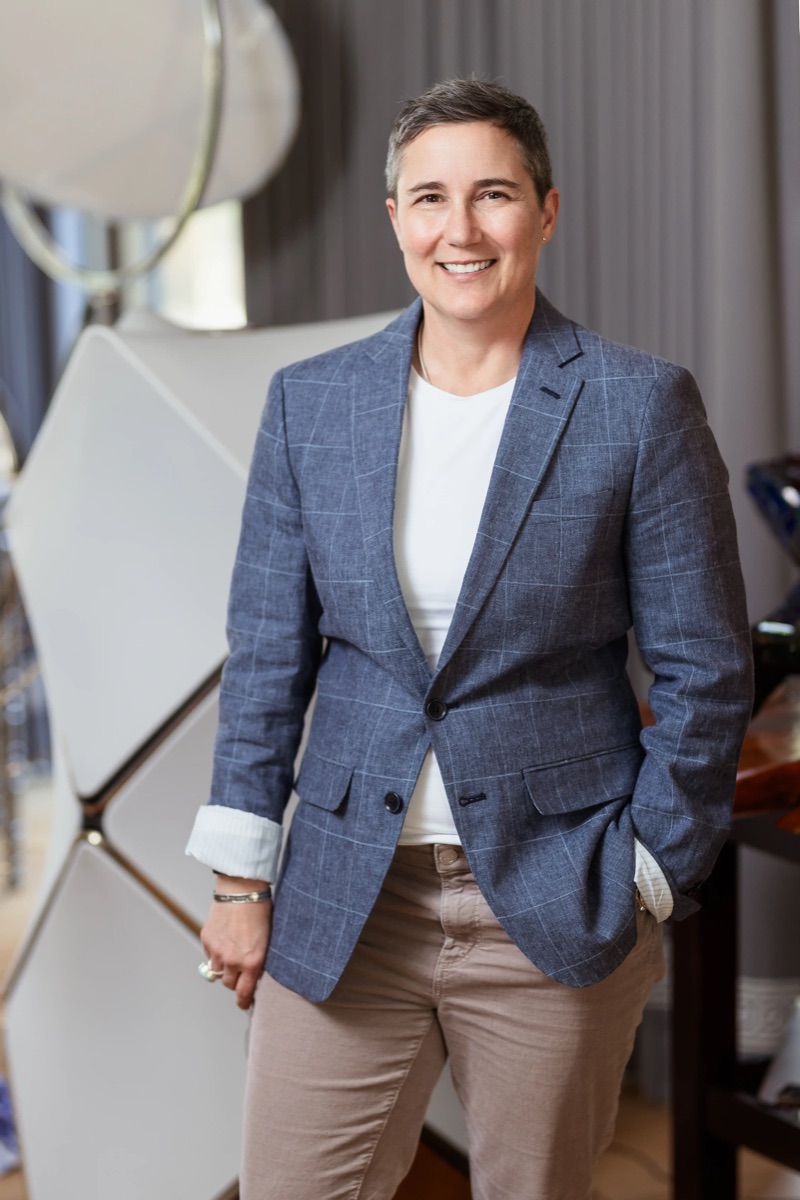
Jude Chedville, APRN, CNS-BC
Jude is a board-certified Clinical Nurse Specialist and the founder of Victory Rejuvenate. Board certification as a CNS is itself a graduate-level clinical credential with an examination behind it — before any hormone-specific training enters the picture.
On top of that, she completed advanced bioidentical hormone replacement therapy training through WorldLink Medical under the mentorship of Dr. Neal Rouzier, one of the longest-standing educators in the field, and she is certified in clinical peptide therapeutics through the SSRP Institute. Her background before Victory was critical care and functional medicine — which is to say she spent years around patients whose problems could not be solved with a single prescription.

Donovan Simmons, MD
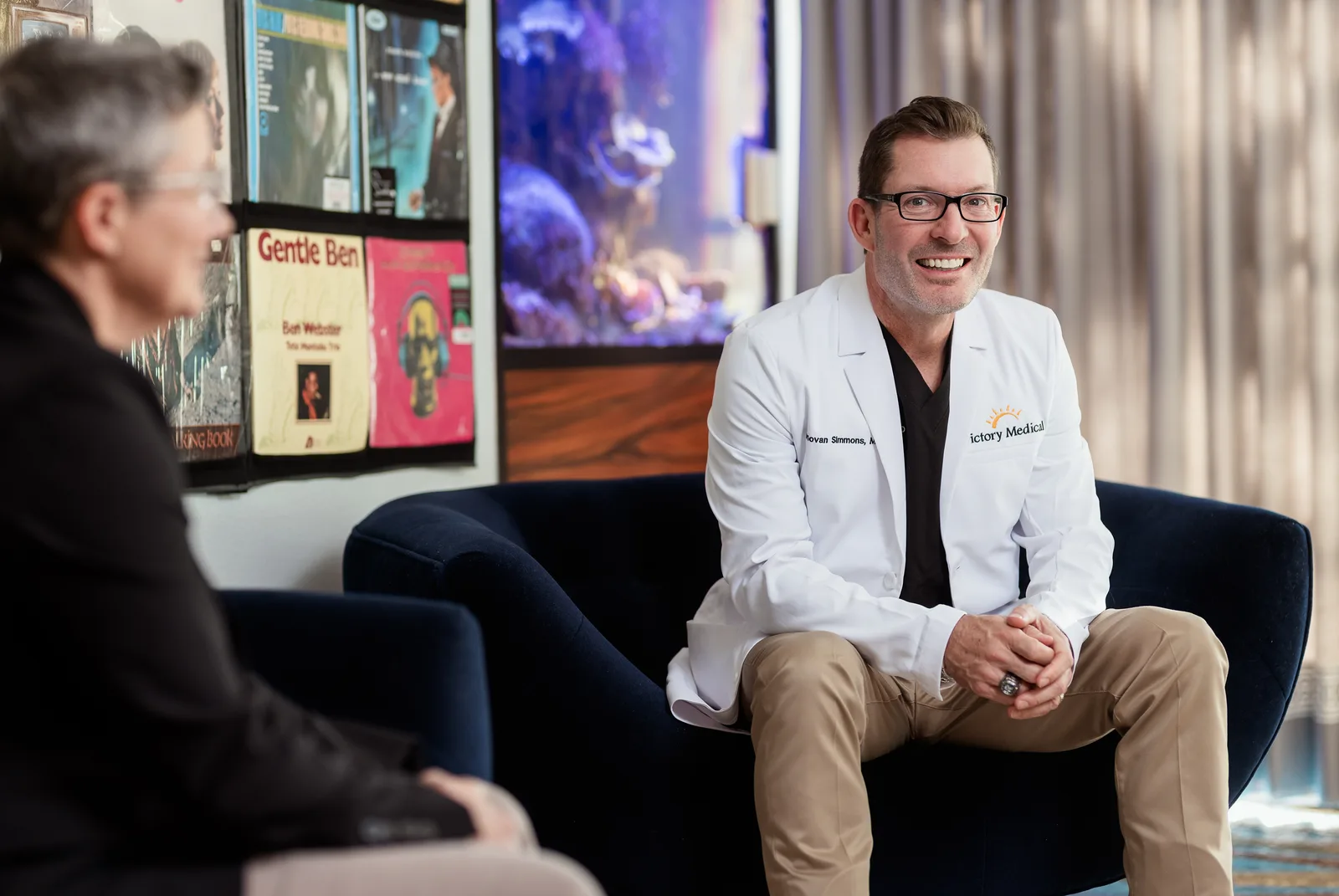
Dr. Simmons serves as Medical Director, and his background is emergent and intensive care medicine. That matters more than it might sound. A physician who has spent years managing the acute end of chronic disease brings a specific instinct to a wellness practice: a low tolerance for protocols that sound good and a high interest in what the numbers say.
He reviews the hormone, peptide, and metabolic protocols used at Victory Rejuvenate for medical safety and evidentiary support. When a request falls outside what the evidence supports, that is where it gets caught.
The useful question is not whether a clinic offers hormone therapy. It is who reviews the protocol, and what happens when the evidence says no.
What That Looks Like in Your Visit
Credentials are only worth what they change in practice. Here is how ours show up at Victory Rejuvenate:
- The workup comes before the prescription. Comprehensive lab testing establishes a baseline — sex hormones, thyroid, metabolic markers, and lipids — because a single hormone value read in isolation tells you very little.
- Dosing is physiologic and individual. The goal is to restore a level your body recognizes, not to overshoot it. For women, that means the range seen in healthy young women, not a fraction of a male protocol.
- We re-test on a schedule. Levels early after starting, then ongoing monitoring, so the dose is adjusted from data rather than from how a given month felt.
- We tell you when the evidence is thin. Some of what patients ask for is well supported. Some is plausible but unproven — and we say which is which. That distinction is exactly what the FDA spent September 17 examining for testosterone in women.
- There is a named physician behind the plan. Not a signature on a page — an involved medical director who reviews protocols.

Questions Worth Asking Any Hormone Clinic
You do not have to take our word for any of this. If you are evaluating hormone care in Austin or anywhere else, these five questions separate practices quickly:
- What specific training did my prescriber complete, and when did they last take accredited CME in hormone medicine? A real answer names a program and a recent year.
- What labs will you run before prescribing, and what will you re-check? If the answer is a single hormone level, or nothing at all, that is your answer.
- Who is the medical director, and what is their role in my plan? A name and an actual function, not a listing.
- What is the evidence for treating my specific goal? A good clinician can tell you where the evidence is strong, where it is emerging, and where it is absent.
- Under what circumstances would you tell me not to do this? Any clinic that cannot answer this has a business model, not a clinical philosophy.
Why We Keep Going Back
Hormone medicine has been wrong before, publicly and expensively. It has also been unfairly dismissed, and is currently in the middle of correcting that dismissal. Both of those things are true at once, and the only way to practice responsibly inside that is to keep reading the new data — including the data that complicates what you already believed.
That is why Jude and Dr. Simmons are in a conference hall in Miami this week instead of only in the clinic. It is also why we can tell you, honestly, where the evidence for testosterone in women currently stops.
If you want hormone care from people who treat this as a specialty rather than an add-on, that is what we built. Book a consultation and bring your questions — including the five above.
Frequently Asked Questions
Is “hormone specialist” an official credential?
No. In the United States, terms like “hormone specialist,” “BHRT certified,” and “anti-aging specialist” are not protected titles governed by a licensing board. That is precisely why it is worth asking a clinic what specific training and continuing education stand behind the phrase.
What training does Victory Rejuvenate’s team have in hormone therapy?
Jude Chedville is a board-certified Clinical Nurse Specialist (APRN, CNS-BC) who completed advanced bioidentical hormone replacement therapy training through WorldLink Medical under Dr. Neal Rouzier, and is certified in clinical peptide therapeutics through the SSRP Institute. Dr. Donovan Simmons, our Medical Director, is a physician with a background in emergency and intensive care medicine who reviews our hormone, peptide, and metabolic protocols.
What is the WorldLink Medical Academic Summit?
It is WorldLink Medical’s annual continuing education conference for prescribers practicing hormone and metabolic medicine. The 11th annual summit runs September 18–20, 2026, in Miami Beach and offers 18 hours of AMA PRA Category 1 Credit and 18 nursing contact hours, jointly accredited by the ACCME and ANCC, with faculty from institutions including USC, Stanford, and City of Hope.
Does more training mean I will be told yes more often?
Usually the opposite. Deeper training tends to produce more specific recommendations and a greater willingness to say a particular therapy is not supported for a particular goal. A clinician who says yes to everything is not demonstrating expertise.
Do you treat men as well as women?
Yes. We provide hormone optimization for both, including menopause and perimenopause care for women and testosterone therapy for men, each with its own workup, dosing approach, and monitoring schedule.
This article is educational and does not constitute medical advice. All care at Victory Rejuvenate is physician-supervised, candidacy and protocols are determined individually at consultation, and individual results vary.
Clinical Note: This content is for educational purposes only and does not constitute medical advice. Hormone and peptide therapies should always be managed by a qualified healthcare provider following a comprehensive evaluation.