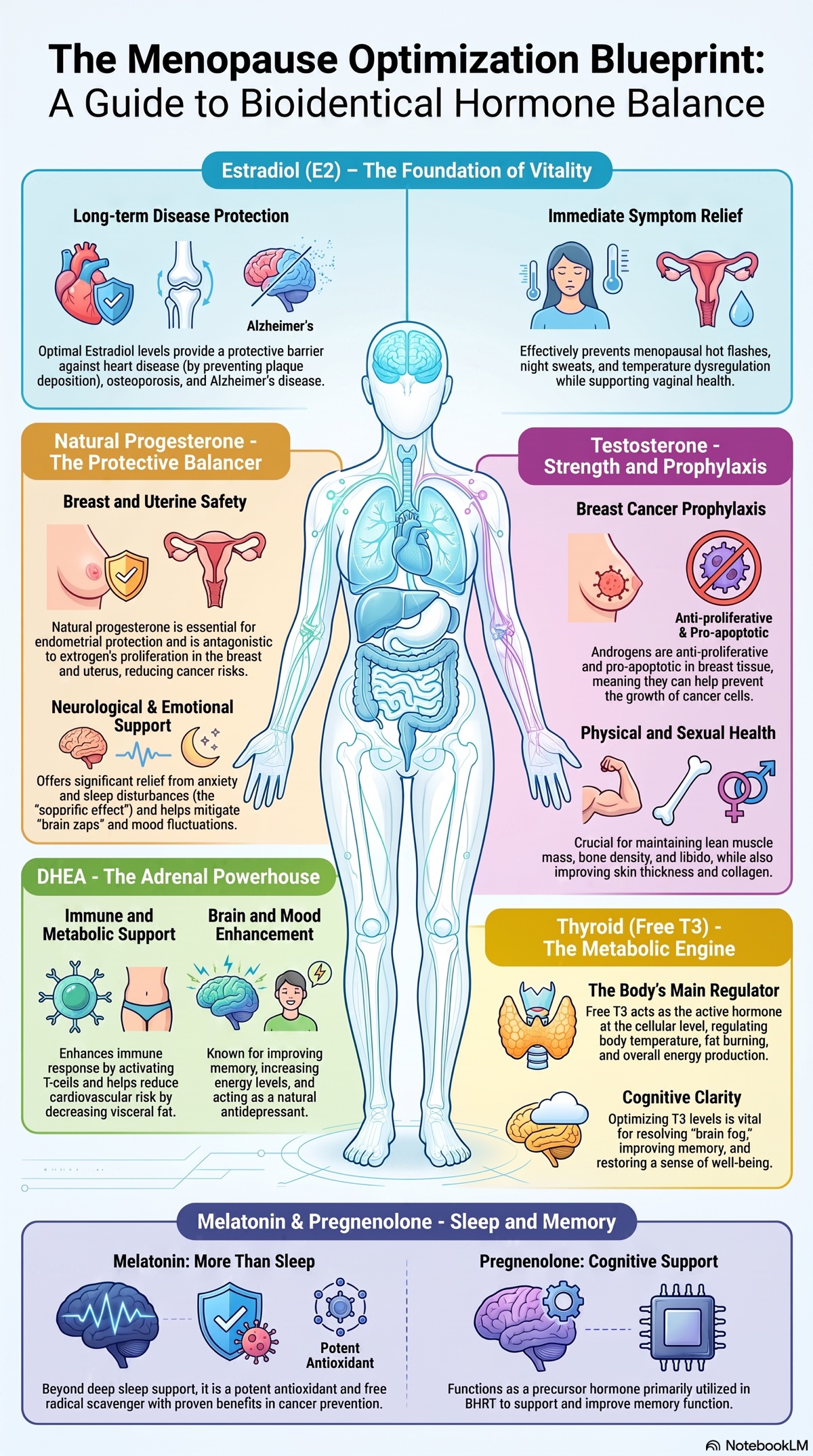
Menopause is not a single-hormone event. As the ovaries wind down, a whole network of hormones shifts at once — and the symptoms women experience, from hot flashes and brain fog to sleep disruption and loss of muscle and bone, reflect that broader change. A root-cause approach to hormone optimization looks beyond estrogen alone to the full picture of bioidentical hormone balance. The blueprint below maps the core hormones involved, what each one does, and why restoring them to optimal levels supports both immediate symptom relief and long-term health.
Estradiol (E2) — The Foundation of Vitality
Estradiol is the most potent form of estrogen and the anchor of menopausal hormone optimization. It works on two timescales. In the short term, optimal estradiol effectively addresses the classic menopausal symptoms — hot flashes, night sweats, temperature dysregulation, and vaginal health. In the long term, healthy estradiol levels are associated with protection of the heart (in part by limiting arterial plaque deposition), the bones (guarding against osteoporosis), and the brain (supporting cognitive health as women age).
Natural Progesterone — The Protective Balancer
Progesterone is the essential counterbalance to estrogen. For any woman with an intact uterus, natural progesterone provides endometrial protection, and it acts as an antagonist to estrogen's proliferative effect in both the breast and the uterus. Beyond that protective role, progesterone has meaningful neurological and emotional benefits: it is known for its calming, sleep-supporting "soporific" effect and can help ease anxiety, sleep disturbances, mood fluctuations, and the "brain zaps" some women describe during the transition.
Testosterone — Strength and Prophylaxis
Testosterone is not just a male hormone — it is crucial for women's physical and sexual health. It helps maintain lean muscle mass, bone density, and libido, and supports skin thickness and collagen. In breast tissue, androgens are anti-proliferative and pro-apoptotic, a mechanism researchers associate with a protective role against abnormal cell growth. Restoring testosterone to a healthy range is often the missing piece for women who still feel depleted after estrogen and progesterone are addressed.
DHEA — The Adrenal Powerhouse
DHEA is an adrenal hormone that serves as a precursor to other sex hormones and has benefits of its own. It supports immune function (in part by activating T-cells) and metabolic health, and is associated with reduced cardiovascular risk through decreased visceral fat. DHEA also supports the brain and mood — it has been linked to improved memory, higher energy, and a natural antidepressant-like effect.
Thyroid (Free T3) — The Metabolic Engine
Thyroid hormone is easy to overlook in a menopause conversation, but it is the body's metabolic engine. Free T3 is the active hormone at the cellular level, regulating body temperature, fat burning, and overall energy production. Optimizing T3 is often what resolves the stubborn "brain fog," sluggish metabolism, and low energy that can overlap with — and be mistaken for — menopausal symptoms. Cognitive clarity and a restored sense of well-being frequently track with getting thyroid levels right.
Melatonin & Pregnenolone — Sleep and Memory
Two supporting hormones round out the blueprint. Melatonin is best known for supporting deep sleep, but it is also a potent antioxidant and free-radical scavenger with research interest in cellular protection. Pregnenolone is a foundational precursor hormone — the "mother hormone" from which many others are made — and in bioidentical hormone therapy it is used primarily to support and improve memory and cognitive function.
Putting the Blueprint to Work
No two women arrive at menopause with the same hormonal profile, which is why this blueprint is a map rather than a prescription. Effective bioidentical hormone replacement therapy (BHRT) starts with comprehensive lab testing to see exactly which of these hormones have shifted, followed by a personalized plan that restores balance across the whole system — not just one hormone in isolation. The goal is both immediate relief and durable, long-term protection of the heart, bones, brain, and metabolism.
Frequently Asked Questions
Is bioidentical hormone therapy just estrogen replacement?
No. As the blueprint shows, comprehensive menopause optimization considers estradiol alongside progesterone, testosterone, DHEA, thyroid, and supporting hormones like melatonin and pregnenolone. Addressing only estrogen often leaves women with lingering symptoms — fatigue, low libido, poor sleep, or brain fog — that trace back to one of the other hormones.
What does "bioidentical" actually mean?
Bioidentical hormones are chemically identical to the hormones the human body produces naturally, which allows them to bind to the body's hormone receptors in the same way. This is different from some older synthetic hormone formulations that are structurally distinct from the body's own hormones.
How do I know which hormones I need?
The only reliable way is comprehensive testing paired with a review of your symptoms and health history. A provider uses that data to identify specific deficiencies and imbalances, then builds a personalized protocol and adjusts it over time based on follow-up labs and how you feel.
Are there long-term health benefits beyond symptom relief?
Yes. Optimal levels of these hormones are associated with protection of cardiovascular, bone, and cognitive health, along with preserved muscle mass and metabolic function — benefits that extend well beyond controlling hot flashes and night sweats. As with any therapy, benefits and risks should be weighed individually with a qualified provider.
Clinical Note: This content is for educational purposes only and does not constitute medical advice. Hormone and peptide therapies should always be managed by a qualified healthcare provider following a comprehensive evaluation.