Aesthetic Medicine
The 8 Best Dermal Filler Treatments in Austin (2026 Guide)
November 5, 202612 min read

The best dermal filler treatments in Austin in 2026 are lip enhancement, cheek restoration, chin and jawline contouring, under-eye (tear trough) correction, temple filling, nasolabial fold softening, and Sculptra collagen stimulation — each planned around your anatomy by licensed injectors at Victory Med Spa.
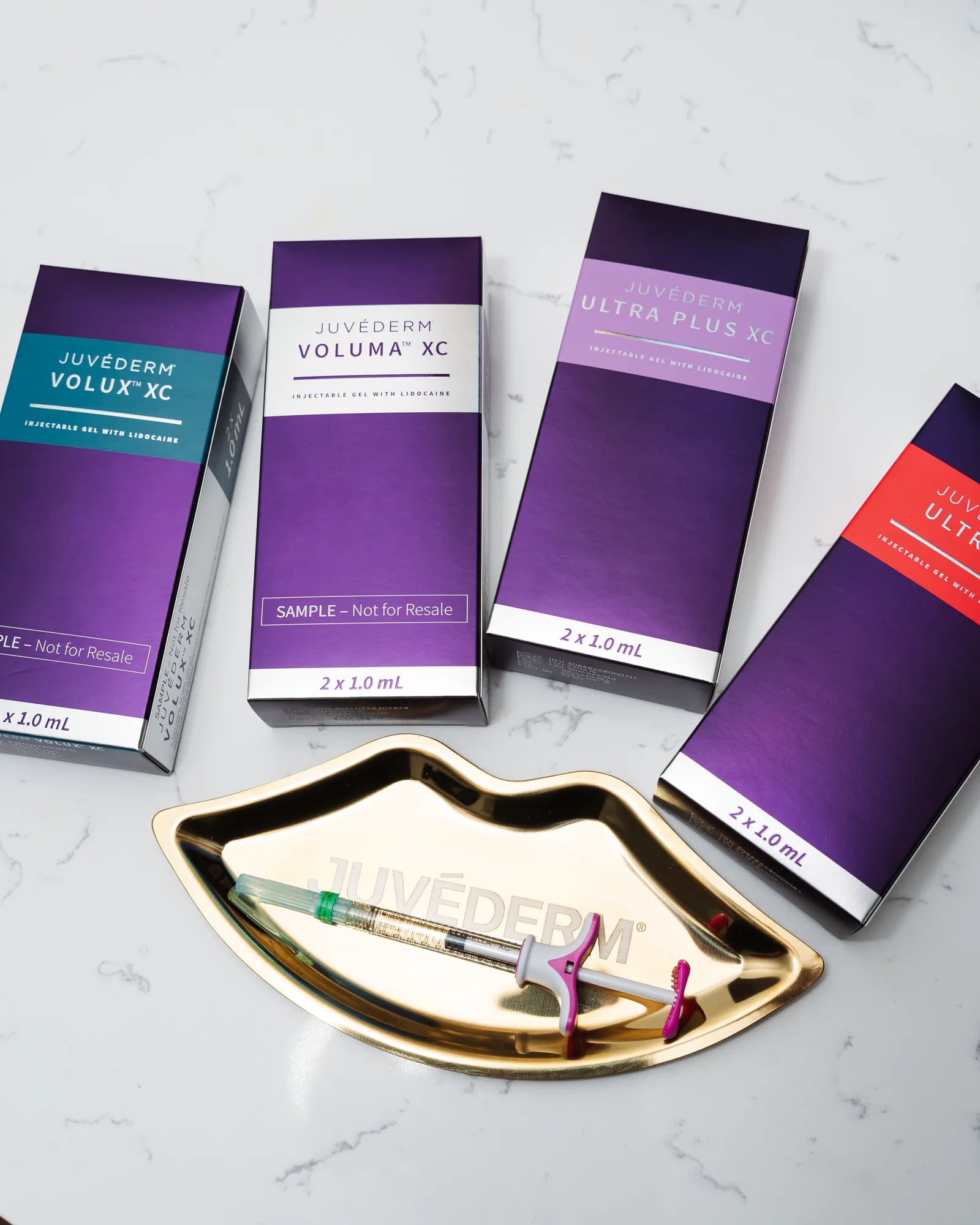
Dermal fillers have changed a great deal in the past decade. The trend has moved away from simply filling lines and toward restoring structure — supporting the cheeks so the lower face is lifted, defining a jawline so the profile is balanced, replacing the volume that age, genetics, or weight loss have taken. Done well, the result does not look like filler. It looks like you, a few years more rested.
At Victory Med Spa in South Austin, our providers treat patients from South Lamar, Westlake Hills, and greater Austin with hyaluronic acid (HA) fillers and the biostimulator Sculptra. This guide covers the eight filler treatments we perform most often, who each one suits, and what to expect. It is educational only, and results vary.
Key Takeaways
- Most fillers are hyaluronic acid, a substance your body already makes. HA fillers are FDA-approved, gradually metabolized, and reversible with hyaluronidase.
- Results are immediate with HA filler and typically last 6 to 18 months depending on the product and area.
- Sculptra works differently, stimulating your own collagen over a series of sessions for gradual, longer-lasting improvement.
- Structure first, lines second. Supporting the cheeks or chin often improves folds and shadows elsewhere on the face.
- Anatomy expertise matters. Fillers carry rare but serious risks, so a licensed provider and a Good Faith Exam are essential.
How We Think About Choosing a Filler Treatment
We rarely start with the line a patient points to. A deep nasolabial fold, for example, is often the downstream effect of cheek volume loss, and placing filler in the fold alone can make the face look heavier. Instead, our injectors assess the face as a whole: bone structure, fat pads, skin thickness, proportions between the forehead, midface, and lower face, and how everything moves when you talk and smile.
From there we choose the product — firmer HA gels for structure on bone, softer, more flexible gels for lips and fine areas, or Sculptra for gradual collagen support — and the amount, which is often less than people expect. We also discuss whether a non-filler option such as a neuromodulator or RF microneedling would address your concern better. For a deeper look at the philosophy, read our facial balancing guide.
1. Lip Filler — Best for Shape, Definition, and Hydration
Lip filler is the treatment most people think of first, and it is far more versatile than “bigger lips.” A skilled injector can define the vermilion border, correct asymmetry, add gentle volume, soften vertical lip lines, or simply restore hydration to lips that have thinned with age.
Lip results tend to last at the shorter end of the filler range because the mouth moves constantly. Swelling is common for the first few days, so we suggest planning around events. If you mostly want the upper lip to show a little more without added volume, a lip flip with a neuromodulator may be an alternative or complement.
2. Cheek Filler — Best for Midface Lift and Structure
The cheeks are often the foundation of a filler plan. As we age, the midface loses fat and bone support, and the face can look flatter, more tired, and heavier below. Placing a structural HA filler along the cheekbone and midface can restore contour and indirectly soften shadows under the eyes and folds around the mouth.
Cheek filler often lasts toward the longer end of the range, roughly 12 to 18 months. The goal is support and light reflection, not round, overfilled cheeks. Our injectors use conservative amounts and build in stages when needed.
3. Chin Filler — Best for Profile Balance
The chin has an outsized effect on facial harmony. A small or recessed chin can make the nose look larger, the jawline less defined, and the neck less crisp. Chin filler adds projection and length to bring the profile into balance, and it can also soften a dimpled or “pebbly” chin.
Chin augmentation with filler is a popular non-surgical alternative for patients who are not ready for an implant. Results are visible immediately, and because the chin moves less than the lips, it tends to hold well. Your provider will evaluate the chin together with the jaw and nose to plan proportions.
4. Jawline Filler — Best for Definition and Contour
Jawline filler places firm HA product along the jaw to sharpen the angle, straighten the line from ear to chin, and camouflage early jowling. It is popular with both women and men — with different goals: women often want a smooth, tapered line, while men often want a stronger, more angular frame.
Jawline treatment can take more product than other areas, so we plan it carefully and sometimes in phases. If the lower face looks wide because of a strong chewing muscle rather than a lack of definition, masseter neuromodulator treatment may be the better first step. For loose skin under the jaw, energy-based tools such as Agnes RF are sometimes part of the plan.
5. Under-Eye (Tear Trough) Filler — Best for Hollows and Shadows
Tear trough filler places a small amount of soft HA filler in the hollow between the lower eyelid and cheek to reduce shadowing and the tired look it creates. It is one of the most requested treatments — and one of the most technique-sensitive, because the skin is thin and the area is close to important blood vessels.
Not everyone is a candidate. Puffiness from fluid or fat bags, very thin skin, or dark circles caused by pigment often do not improve with filler and can even look worse. In many patients, treating the cheek first improves the under-eye area enough. Our providers will tell you honestly whether you are a good candidate.
6. Temple Filler — Best for Restoring Hollowed Temples
Temples are an under-appreciated area. When they hollow with age, athletic leanness, or weight loss, the face can take on a skeletal, “peanut” shape and the brow tail can drop. Replacing volume in the temples restores a smooth curve from forehead to cheek and can give the outer brow subtle support.
Temple filler is often included in a full-face plan, especially for patients who have lost weight. Both HA fillers and Sculptra can be used here depending on your goals. Learn more about volume restoration after weight loss in our GLP-1 face guide.
7. Nasolabial Fold Filler — Best for Smile Lines
Nasolabial folds are the lines that run from the sides of the nose to the corners of the mouth. Everyone has them to some degree; they deepen with volume loss and skin laxity. Softening them with filler is one of the longest-established filler uses and can make the face look more rested.
As noted above, we often address the cheeks first, because restoring midface support can lift and soften the folds with less product placed directly in them. When fold treatment is needed, we use a product and technique designed to look natural when you smile.
8. Sculptra — Best for Gradual, Collagen-Building Volume
Sculptra is not a traditional filler. It is injectable poly-L-lactic acid, a biostimulator that prompts your skin to produce its own collagen over time. Instead of an instant change, Sculptra delivers gradual improvement in firmness, thickness, and volume across a series of sessions, typically two to three, and results can last two years or more.
Sculptra suits patients with broad, diffuse volume loss — including after significant weight loss — and those who prefer a slow, subtle change. It is often combined with HA filler, which provides immediate definition while Sculptra builds underneath. Sculptra should not be used by people with a history of keloids or hypertrophic scarring. See our GLP-1 facial restoration page for how we pair the two.
The 8 Best Dermal Filler Treatments at a Glance
| Treatment | Best For | Typical Duration* |
|---|---|---|
| Lip filler | Shape, definition, hydration | Shorter end of 6–18 months |
| Cheek filler | Midface lift and structure | About 12–18 months |
| Chin filler | Profile balance | About 12–18 months |
| Jawline filler | Definition and contour | About 12–18 months |
| Under-eye filler | Hollows and shadows | Varies; candidacy is key |
| Temple filler | Hollowed temples | Varies by product |
| Nasolabial folds | Smile lines | Varies by product |
| Sculptra | Gradual collagen-building volume | Can last 2+ years after a series |
*Durations are general ranges. Product, area, and individual metabolism all affect how long results last.
What to Expect at Your Visit
Your appointment at Victory Med Spa begins with an in-depth facial assessment and the Good Faith Exam required by Texas regulations. Your provider reviews your medical history and medications, analyzes your facial structure and volume, and builds a plan with you — including which product, how much, and whether a staged approach makes sense.
Topical numbing is applied, and many fillers contain lidocaine. Injection typically takes 30 to 45 minutes, and HA results are visible right away. Mild swelling, redness, or bruising is normal for a few days. Avoid intense heat, strenuous exercise, and pressure on treated areas for about 24 hours, and avoid blood-thinning supplements before treatment if your provider advises. A two-week follow-up lets us review your settled result.
Many patients from South Lamar, Barton Hills, and Westlake Hills schedule filler alongside neuromodulator maintenance. Check our current specials for seasonal offers.
Safety: Side Effects and Who Is Not a Candidate
Hyaluronic acid fillers are FDA-approved for facial tissue augmentation and correction of moderate-to-severe wrinkles and folds. The most common side effects are bruising, redness, swelling, pain, tenderness, and itching at the injection site. Rare but significant risks include vascular occlusion, in which filler blocks a blood vessel and can damage skin or, very rarely, affect vision, as well as infection, nodules, and delayed inflammatory reactions. These risks are why we only perform filler with licensed providers under physician supervision, and why HA filler’s reversibility with hyaluronidase is so valuable.
Fillers should not be used by patients with severe allergies, bleeding disorders, or active infection or skin inflammation at the treatment site, or by those who are pregnant or breastfeeding. Sculptra should not be used by people allergic to any of its ingredients or with a history of keloid formation or hypertrophic scarring. If you have an autoimmune condition, a history of cold sores near the treatment area, or upcoming dental work or vaccinations, let your provider know so timing can be planned.
This article is educational only and does not constitute medical advice. A consultation is required to determine whether treatment is right for you, and individual results vary.
Frequently Asked Questions
How long do dermal fillers last?
Most hyaluronic acid fillers last roughly 6 to 18 months, depending on the product, the area, and your metabolism. Lips tend to break down faster, while cheeks and the jawline often last closer to 12 to 18 months. Sculptra, a collagen biostimulator, builds results over a series of sessions and can last two years or more.
Can hyaluronic acid filler be dissolved?
Yes. Hyaluronic acid fillers can be dissolved with an enzyme called hyaluronidase if you are unhappy with the result or in the rare event of a complication. Sculptra is not an HA product and cannot be dissolved this way, which is one reason it is planned conservatively.
Does filler hurt?
Most patients describe mild, brief discomfort. Topical numbing cream is applied beforehand, and many fillers contain lidocaine, a local anesthetic, to keep the treatment comfortable. Lips are typically the most sensitive area.
What are the risks of dermal fillers?
Common, temporary effects include swelling, bruising, redness, tenderness, and small bumps. Rare but serious risks include vascular occlusion, where filler blocks a blood vessel, and infection. That is why a Good Faith Exam and a provider trained in facial anatomy matter. At Victory Med Spa, treatments are performed by licensed providers under physician supervision.
Where can I get dermal fillers near Westlake or South Lamar?
Victory Med Spa is at 2108 W Ben White Blvd, Austin, TX 78704, convenient to South Lamar, Westlake Hills, and greater Austin. Book a filler consultation online or call (512) 969-6900.
Curious which filler plan would suit your face? Book a filler consultation at Victory Med Spa, 2108 W Ben White Blvd, Austin, TX 78704, or call (512) 969-6900. We see patients from South Lamar, Westlake, and throughout greater Austin.
Please note: This article is educational and is not medical advice. Every treatment at Victory Med Spa starts with a consultation with a licensed provider.
Treatments in this article
Ready to talk
it through?
Consultations are free. Bring your questions and we’ll bring a plan.