Radiofrequency microneedling has quietly become one of the most effective tools in aesthetic medicine — a way to rebuild the skin's own collagen scaffolding without surgery. Victory Med Spa in Austin offers two complementary RF platforms, Scarlet™ SRF and Agnes™ Precision RF, and one of the most common consultation questions we hear is: which one is right for me?
How RF Microneedling Works
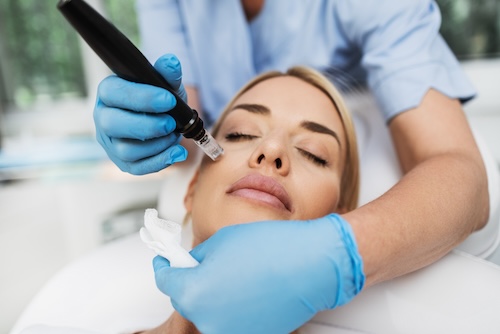
Traditional microneedling creates controlled micro-injuries that prompt the skin to heal itself with fresh collagen. RF microneedling supercharges that process: ultra-fine needles deliver radiofrequency energy directly into the dermis, heating the deeper layers to a temperature that triggers robust collagen and elastin remodeling while leaving the skin's surface largely intact. The result is progressive tightening, smoother texture, and firmer structure — improvements that build for months after treatment.
Scarlet™ SRF: The Full-Field Tightener
Scarlet is our workhorse for overall skin quality across the face, jawline, and neck. Its microneedle array treats broad areas evenly, making it the choice for skin laxity, fine lines, enlarged pores, uneven texture, and early jowling. Sessions take under an hour with topical numbing, and downtime is minimal — typically a day or two of redness. A series of about three sessions, spaced roughly a month apart, is a common starting plan, with results maturing over three to six months as new collagen forms.
Agnes™ Precision RF: The Targeted Specialist
Agnes takes a different approach: instead of treating broad fields, it delivers focused RF energy through precisely placed needles to remodel specific problem areas. It's our tool of choice for under-eye bags, small pockets of jowl fat, a softening chin line, and stubborn concerns like acne along the jaw. Because Agnes can selectively treat the small fat compartments and lax tissue driving these issues, it can achieve improvements in areas once considered surgical territory — with far less downtime than surgery.
Which One — or Both?
Many treatment plans combine them: Agnes for the targeted correction (under-eyes, jowls), Scarlet for overall tightening and texture across the face and neck. Your provider maps this at a complimentary consultation based on your skin's laxity, your anatomy, and your goals. Kristin Laskaris, our certified Scarlet and Agnes technician, coordinates these plans alongside our injectors so RF, injectables, and skincare work together rather than in silos.
Recovery, Enhanced by Peptides
RF microneedling's collagen response is exactly the kind of biological process our peptide-enhanced aftercare is designed to support. Where appropriate, we integrate regenerative GHK-Cu copper peptide protocols — clinical science from our sister practice, Victory Rejuvenate — to amplify collagen synthesis, calm post-treatment redness faster, and extend your results. It's a pairing most med spas simply don't offer.
Frequently Asked Questions
Does RF microneedling hurt?
Treatments are performed with topical numbing, and most patients describe pressure and warmth rather than pain. Sensitivity varies by area — your provider adjusts settings accordingly.
How much downtime should I plan for?
Scarlet: typically a day or two of redness, similar to a mild sunburn. Agnes: localized swelling in the treated spots that can last a few days. Neither generally requires time off work — many patients treat on a Thursday or Friday and are camera-ready by Monday.
When will I see results?
Some early tightening can appear within weeks, but the real transformation builds over two to six months as new collagen matures. Photos at your follow-up usually surprise people — collagen remodeling is gradual but substantial.
How much does it cost?
Pricing depends on the platform, the areas treated, and the number of sessions in your series — finalized at your complimentary consultation. RF microneedling series qualify for Alphaeon Credit financing, subject to credit approval.
Clinical Note: This content is for educational purposes only and does not constitute medical advice. Hormone and peptide therapies should always be managed by a qualified healthcare provider following a comprehensive evaluation.